
Zenkoji Temple: Origin and History of the Sacred Temple (from 642 CE to 1868)
In Nagano’s quiet temple district, a massive wooden gate marks the entrance to something extraordinary. Zenkoji Temple has been welcoming visitors for over 1,300 years, making it older than most European cathedrals and one of Japan’s most enduring pilgrimage sites. What sets it apart isn’t just its age, it’s the radical idea that still guides it today: everyone belongs here. Discover the origin and history of the sacred Zenkoji Temple.
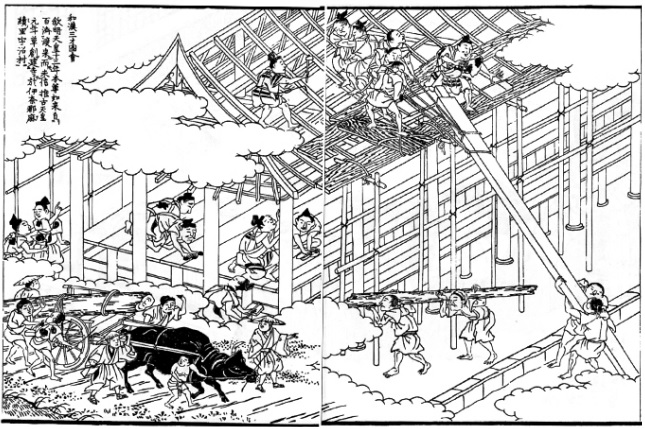
Depiction of the making of Zenkoji Temple (photo: “Zenkoji Road Famous Places” by Toshitada Toyota)
Most Japanese temples belong to specific Buddhist sects, often restricting access based on gender, social class, or religious affiliation. Zenkoji broke that mold from the beginning. The temple established an open-door policy that drew pilgrims from across the country. To this day, you’ll still see that democratic spirit in action as businesspeople in suits bow alongside elderly farmers and young families.
642 CE: Sacred Beginnings
Tradition places Zenkoji’s founding in 642 CE, when the temple was established to house what may be Japan’s oldest Buddhist statue, a golden image of Amida Buddha, reportedly brought from the Korean peninsula during the reign of Empress Suiko. This statue, known as the ‘hibutsu’ (hidden Buddha), remains concealed from public view, considered too sacred for human eyes. Only its ‘maedachi honzon’, a Heian-period replica, emerges every seven years during the great gokaicho ceremony, drawing hundreds of thousands of pilgrims to witness this rare revelation.
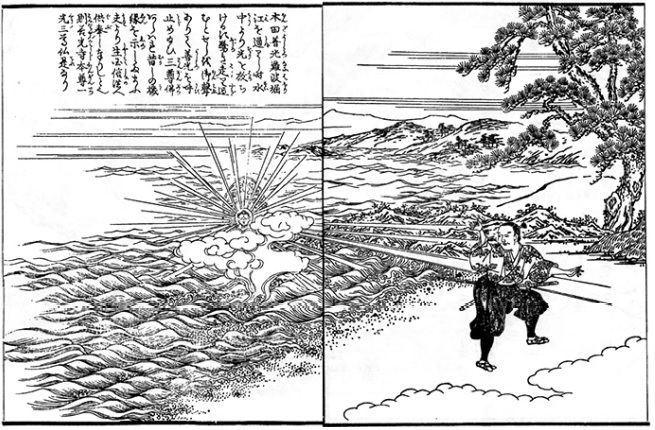
Depiction of Yoshimitsu Honda witnessing Nyorai rising from a canal in Osaka. (source: “Zenkoji Kaido Meisho-zue” picture book of famous places along the road to Zenkoji – Toshitada Toyota)
The Heian Era (794-1185): Seeds of Inclusivity
During the Heian period, as aristocratic Buddhism flourished in Kyoto, Zenkoji Temple was already establishing its distinctive character. Unlike temples tied to specific sects or social classes, Zenkoji welcomed all believers: men and women, nobles and commoners, adherents of different Buddhist schools. This radical inclusivity made it unique among Japan’s religious institutions. And began attracting pilgrims from distant provinces who found themselves excluded elsewhere.

On a pilgrimage to Dewa Sanzan, three sacred mountains in Yamagata prefecture. (photo: City of Shinjo, Yamagata Prefecture)
Kamakura to Muromachi Eras (1185-1573): The Pilgrimage Solidifies
The medieval period saw Zenkoji emerge as one of Japan’s premier pilgrimage destinations. Warriors heading into battle, merchants traveling trade routes, and farming families saving for years to make the journey all found their way to Nagano. The temple’s promise of salvation for all believers, regardless of their ability to perform complex rituals or make expensive offerings, resonated powerfully in an age of social upheaval and uncertainty.
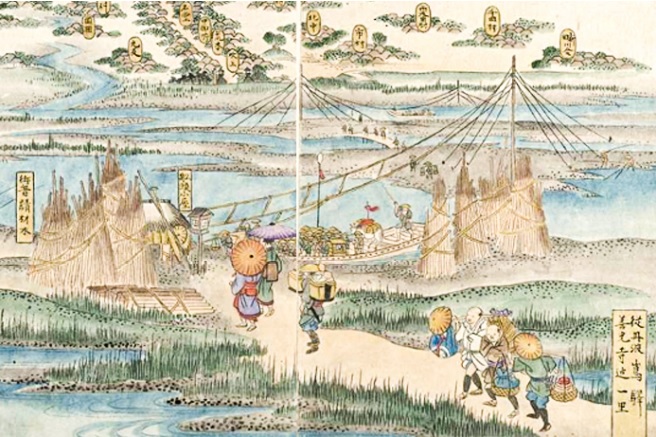
Traveling the Zenkoji Kaido in the Edo Era; passing through Tanbajima-juku, not far from Zenkoji Temple. (photo courtesy of the Shinshu Regional Historical Materials Archive)
Sengoku Era (1467-1615): A Temple Admist the Turmoil
The age of warring states tested Zenkoji’s endurance like no other period. In 1553, the powerful warlord Takeda Shingen relocated the temple’s treasures to his domain in Kai Province (modern Yamanashi) for safekeeping. Later, rival daimyo Uesugi Kenshin moved the temple itself to Echigo Province (Niigata), where it remained for several years. These forced migrations, while disruptive, paradoxically spread Zenkoji’s reputation across Japan as different regions experienced its sacred presence firsthand.
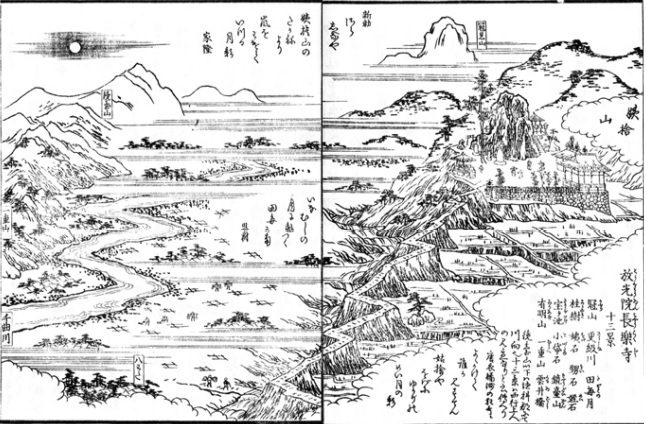
Moon Over the Rice Fields of Obasute, 13 specialties seen from Chorakuji Temple, from the “Zenkoji-do Meisho-zue”
Edo Era (1603-1868): Golden Age of Pilgrimage
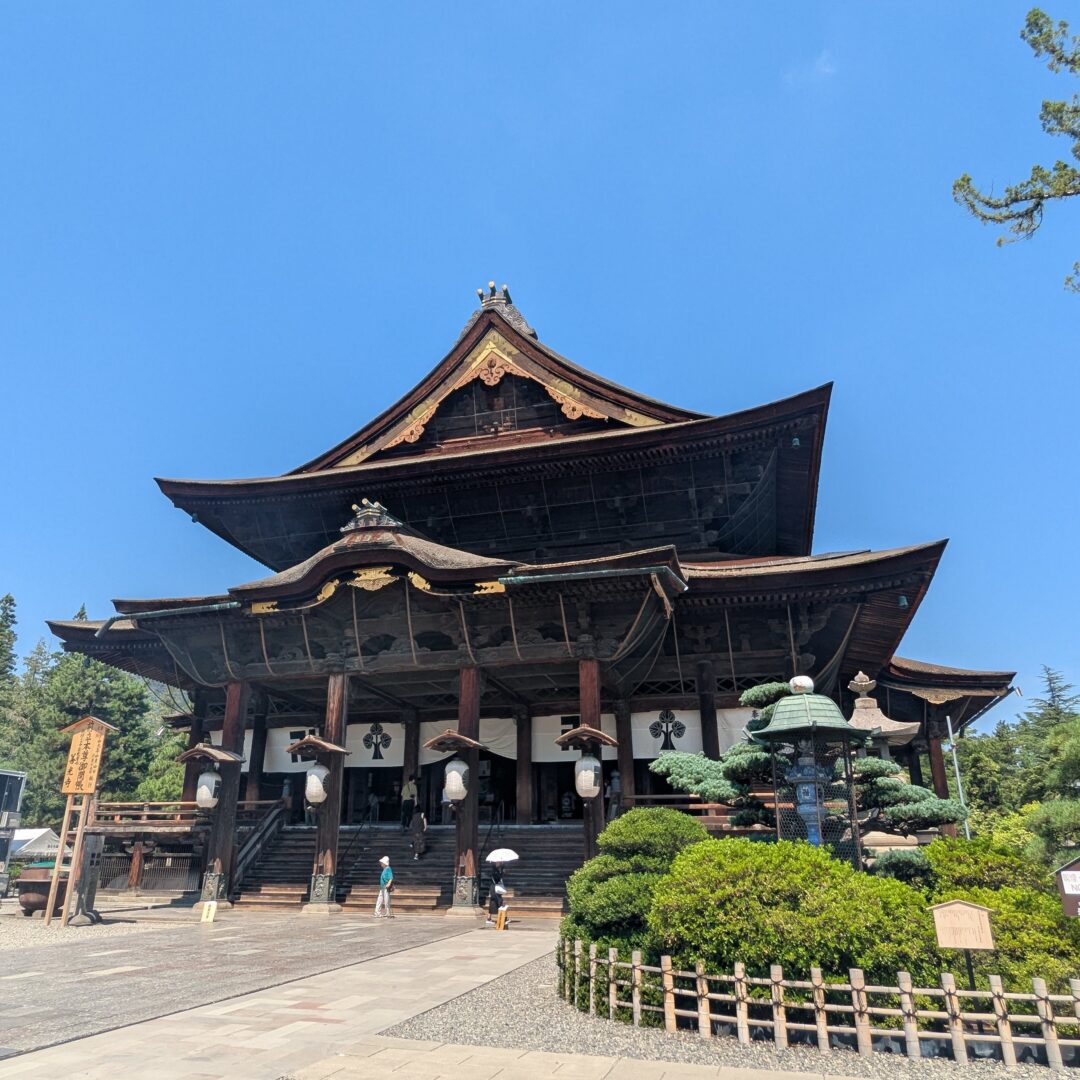
The Tokugawa period brought unprecedented stability and prosperity to Zenkoji. The magnificent main hall, reconstructed in 1707 after a devastating fire, still stands today as a testament to Edo-period craftsmanship. Its soaring roofline and massive timber construction ranking among Japan’s most impressive wooden buildings.
During these centuries, pilgrimage to Zenkoji became a cultural phenomenon. The approach road bustled with inns, tea houses, and shops catering to the constant stream of travelers. Pilgrimage guides were published, popular songs celebrated the journey. And entire villages would sometimes organize group pilgrimages, turning the religious journey into a community celebration.
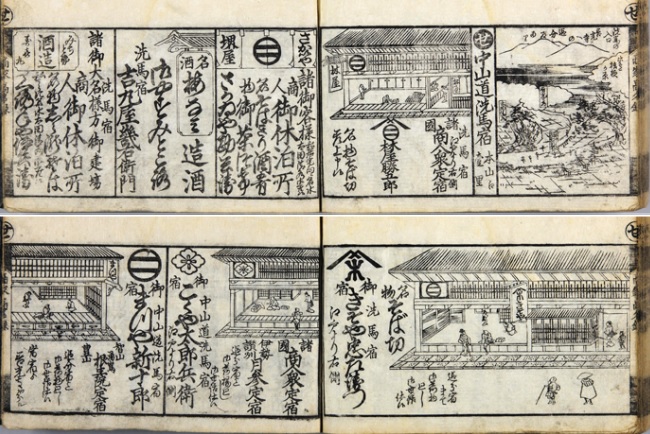
Information on Seba-juku, post town at the beginning of the Zenkoji Kaido, from the “Shokokudochu Shoninkagami” (photo courtesy of Shinshu Digital Commons)
Meiji Restoration Era (1868-1912): Buddhism Under Pressure
The Meiji Restoration brought existential challenges to Japanese Buddhism. The new government’s policy of ‘shinbutsu bunri’ (separation of Shinto and Buddhism) and the brief but intense ‘haibutsu kishaku’ (abolish Buddhism, destroy Shakyamuni) movement threatened temples across Japan. Many lost their landholdings, patronage, and social status.
Zenkoji, however, weathered these storms better than most. Its deep roots in popular faith and its reputation as a temple for ordinary people helped it maintain relevance in the rapidly modernizing nation. The temple adapted to new realities while preserving its essential character, a sanctuary where Japan’s changing society could still find spiritual solace.

A scene from Kumamoto, southwestern Japan; travelers about to embark on a trip to Zenkoji, on a rented Japan National Railways train car. (photo courtesy of Nippon Travel Agency Co., Ltd.)
A Living Legacy
Today, more than thirteen centuries after its founding, Zenkoji continues to embody the inclusive spirit that first distinguished it in ancient Japan. Its story illuminates not just the origin and history of Zenkoji Temple, but the evolution of Japanese Buddhism itself and how faith adapts to survive while maintaining its essential promise of compassion for all beings.
In an age when religious institutions often struggle with relevance, Zenkoji’s millennium-spanning commitment to universal welcome offers both historical insight and contemporary inspiration. It stands as proof that sacred spaces, when true to their deepest values, can endure through any transformation.
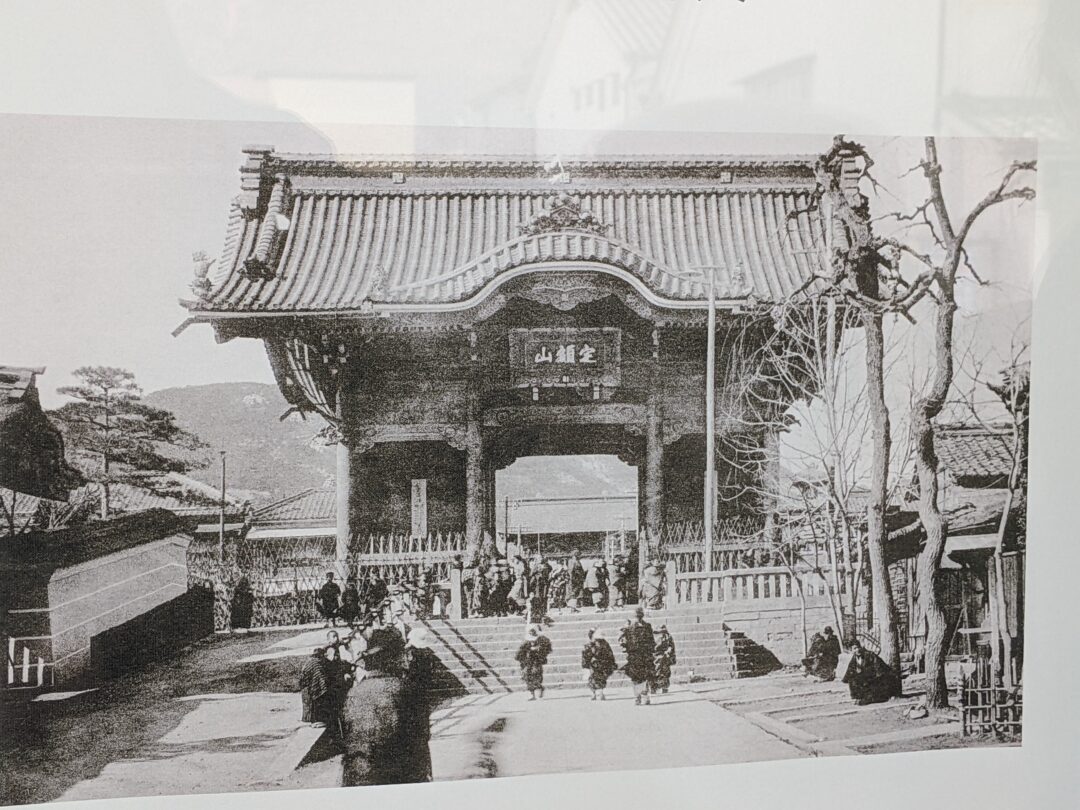
Zenkoji Temple: Origin and History of the Sacred Temple
Thank you for your reading!
Part 2
Join us on our pilgrimage to Zenkoji Temple as we walk the ancient Zenkoji Kaido Road
Author Profile



5 thoughts on “Zenkoji Temple: Origin and History of the Sacred Temple (from 642 CE to 1868)”