
New Year in Matsumoto: Traditions and Festivities in Japan
New Year in Matsumoto – Japan, known as ‘Shōgatsu’, is one of the most important times of the year, marked by traditions that run deep in everyday life. In Matsumoto, a city in the heart of the Japanese Alps, the season unfolds quietly between family rituals, shrine visits, and local customs. The atmosphere stretches from the end of December into the first weeks of January, as decorations go up, bells ring, and daily routines slow down.
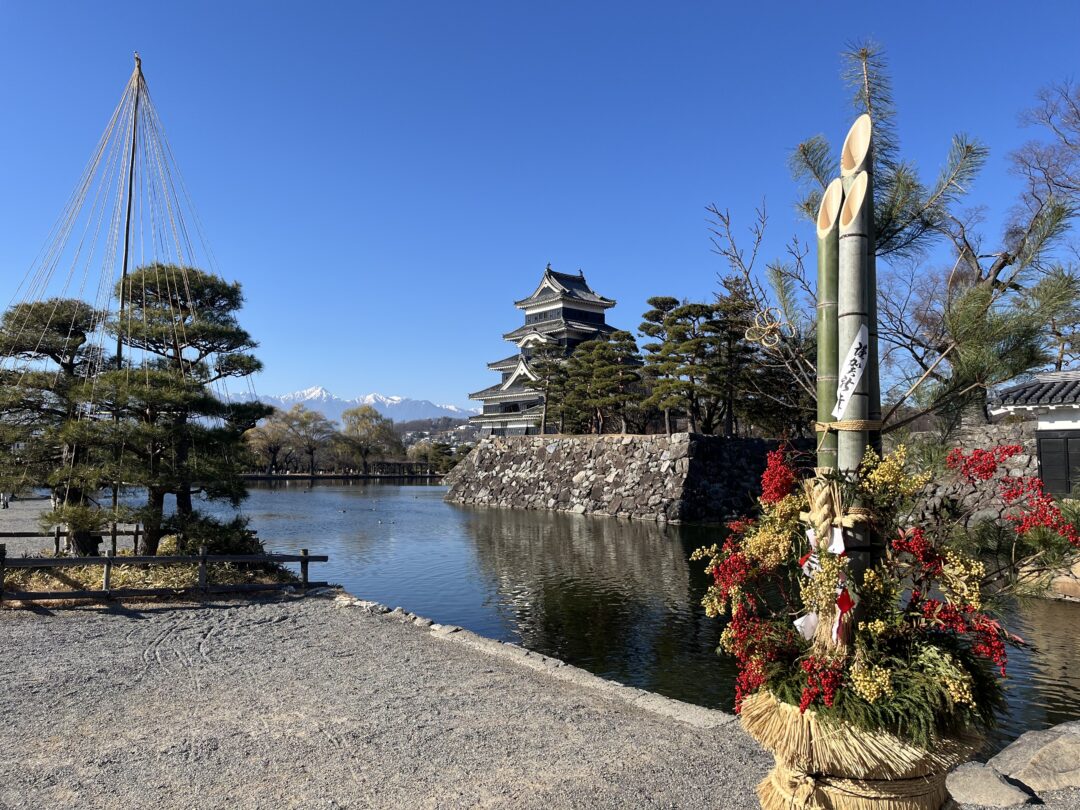
New Year Foods in Matsumoto
Preparations begin several days before December 31. Households do a major year-end cleaning, ōsōji, clearing out dust and clutter as a kind of practical and spiritual reset. On New Year’s Eve it is customary to eat toshikoshi soba, buckwheat noodles associated with longevity and “crossing over” into the new year.
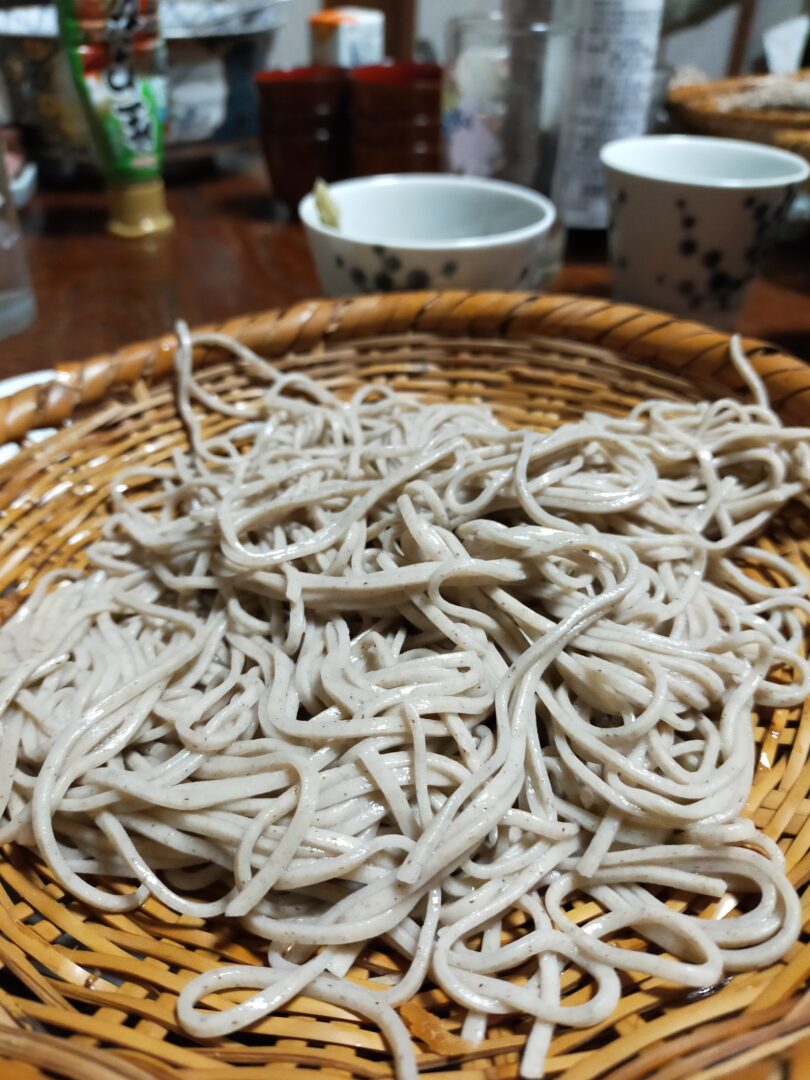
Shinshu Soba: the best of Japan’s Buckwheat Noodles
Many people then listen for the 108 strikes of the temple bell at midnight. This ritual is meant to clear away worldly desires. The night itself is usually quiet, spent at home with family rather than at large parties. On January 1, families share osechi ryōri, a selection of symbolic dishes arranged in stacked lacquered boxes called jubako. The food is prepared in advance so that little cooking is needed in the first days of the year. Each item carries a wish for the year ahead:
– Kuromame (black beans) for health and diligence
– Kazunoko (herring roe) for prosperity and many descendants
– Tazukuri (candied sardines) recalling good harvests and hard work
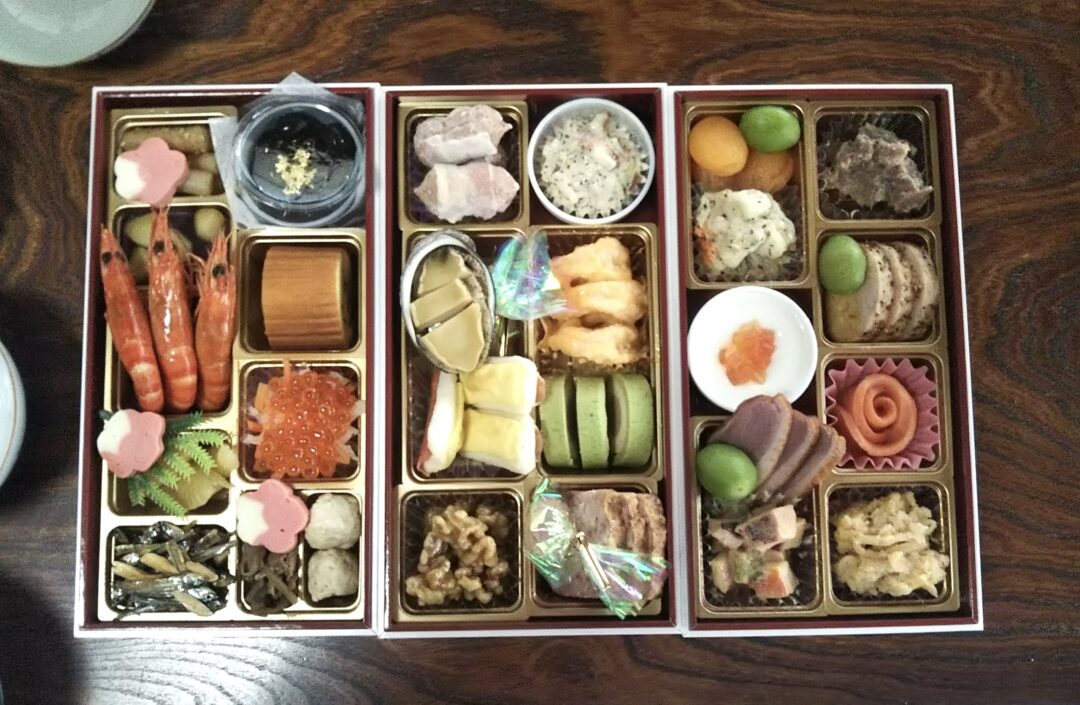
Osechi ryōri, a selection of symbolic dishes arranged in stacked lacquered boxes called jubako
These are often served with ozōni, a soup containing mochi rice cakes and regional vegetables. Originally linked to offerings for the New Year deities, ozōni carries the feeling of a dish shared in thanks for the past year’s harvest and in hope for the next year’s bounty.
Hatsumōde: the first visit of the year
Hatsumōde is the first shrine or temple visit of the new year. Its roots go back to Edo-period customs such as ehomairi, when families would visit a shrine or temple in the year’s auspicious direction to pray for prosperity. Today, most people make this first visit between January 1 and 3 to offer a brief prayer, buy a new charm, and draw a paper fortune.
In Matsumoto, Yohashira Shrine draws large crowds. At busy times, the line for the first prayer of the year can stretch as far back as the entrance of Nawate Street.
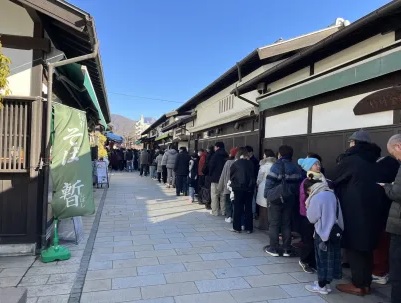
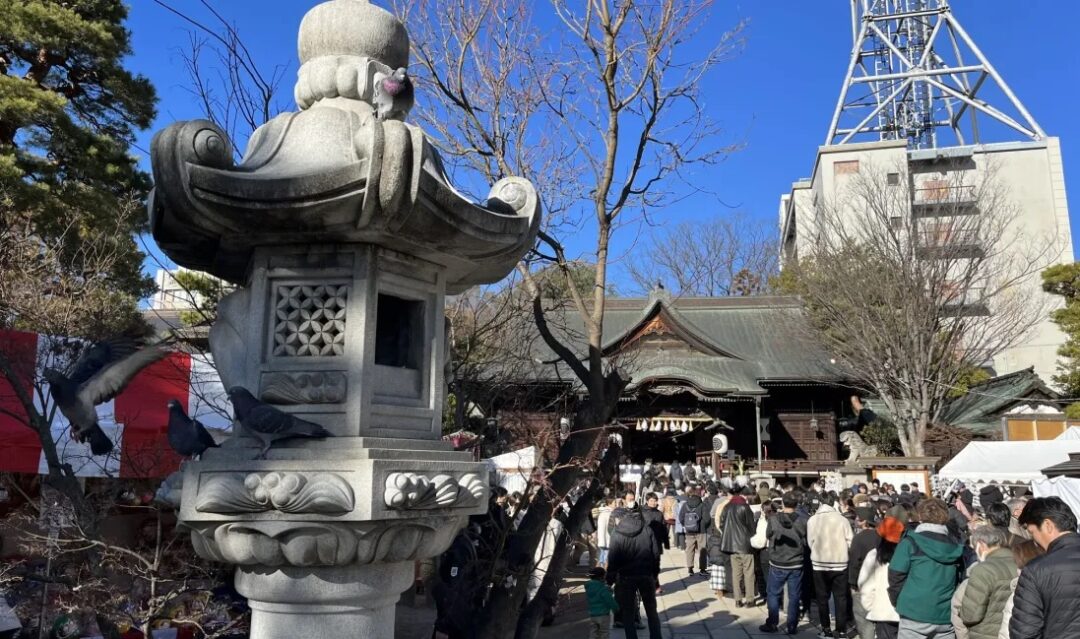
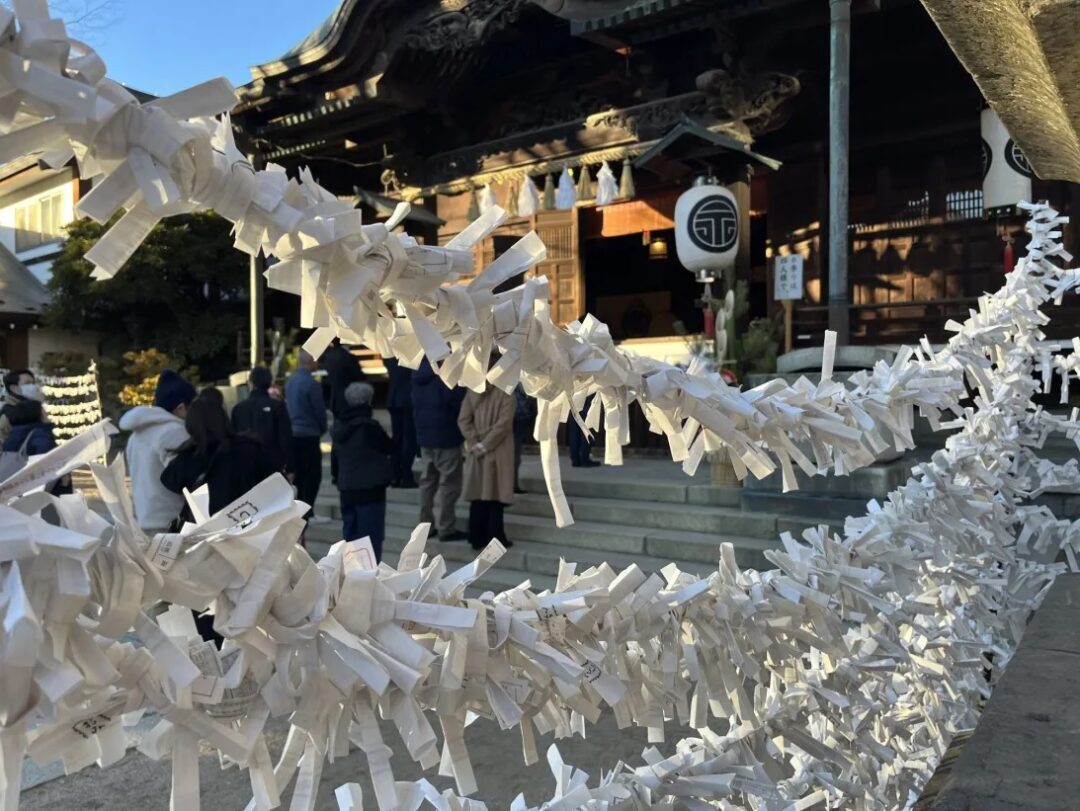
Omikuji, a small paper fortune, at Nawate Street’s Yohashira Shrine
At the shrine, stalls open from the morning selling omamori (protective amulets), snacks, and warm drinks. Drawing an omikuji, a small paper fortune, is part of the visit. If the fortune is good, people often keep it. If it is bad, they usually tie it to a rack or tree branch in the shrine grounds, leaving the bad luck behind.
Decorations and local customs
During the New Year period, homes and businesses in Matsumoto display traditional decorations. Kadomatsu, made from pine and bamboo, stand by entrances to welcome the deities of the new year. Shimenawa, twisted straw ropes, sometimes decorated with paper strips and greenery, mark sacred spaces and thresholds. These items can be bought at shrines, home centers, or supermarkets. And in some neighborhoods local groups gather to make decorations together.


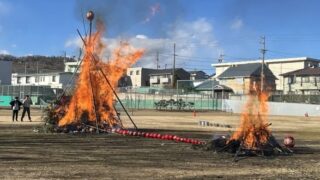
In mid-January, some communities hold small events where New Year decorations are burned in a bonfire. This marks the formal end of the season and sends the decorations’ prayers and wishes up in smoke. After that, everyday routines gradually take over again, and Matsumoto settles back into winter life.
Author Profile

-
Welcome-Matsumoto Blogger / Guide
Languages / Langues : Français, English & 日本語


One thought on “New Year in Matsumoto: Traditions and Festivities in Japan”