Mount Koboyama: A Big Destination with the Low Elevation
Here in Matsumoto there’s no shortage of beautiful mountain scenery. If you have the time, we highly recommend a trip up into the Northern Alps. But if you can’t quite, bike or hike just a bit south of town and check out Mount Koboyama, the big destination with the low elevation!
Mount Koboyama
1,500 Year Old Physique
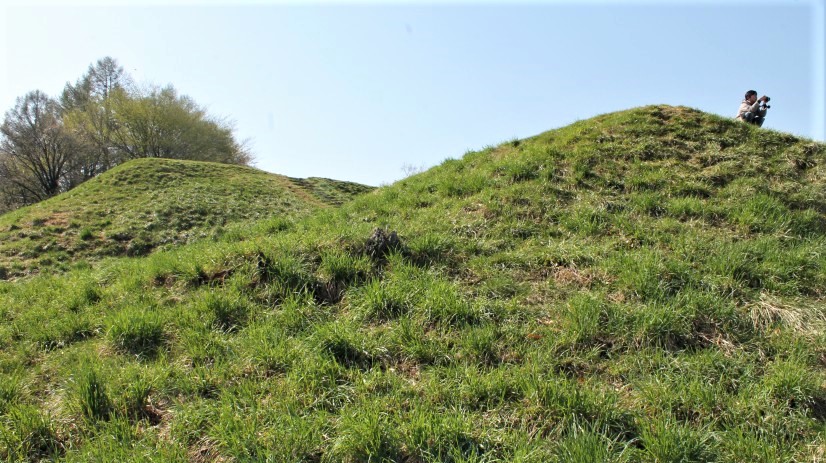
Pass by its feet and you probably won’t notice anything special about this hill with the mountainous reputation. But you may notice something intriguing from afar – an angular, flat-topped profile that could only be man-made.
Koboyama Mounds
And indeed, the top of this mountain was shaped by human hands. Excavation and research have shown that the top of Koboyama is actually a 3rd Century kofun, or burial mound.
For several hundred years, these kofun were so common that the period from the 3rd to the 7th Centuries is called Japan’s Kofun Jidai, or the Kofun Era. Built for local rulers as well as emperors, these mounds are often found to contain relics from the time of the burial. That includes the three major items of royal regalia: the mirror, the sword, and the glass beads called magatama.

Koboyama View
Kofun originated as part of the Shinto rituals surrounding death. With the 7th-Century arrival of Buddhism from the Asian mainland the practice died out – meaning any kofun you see and walk upon is well over a thousand years old.
Koboyama Summit
Legendary Kid of Koboyama
On the north side of Mt. Koboyama is a statue of a boy riding a dragon. His name is Kotaro Izumi, a legendary human child of dragon parents. It is said that Kotaro’s mother, hopelessly ashamed of her reptilian appearance, spent her time hiding under the waters of the ponds of Matsumoto. Kotaro wasn’t a big fan of living under water. But rather than just climb up onto dry land he jumped on the back of another dragon and smashed through the rocky walls of the ponds, creating a river that to this day runs clear up to the Sea of Japan.
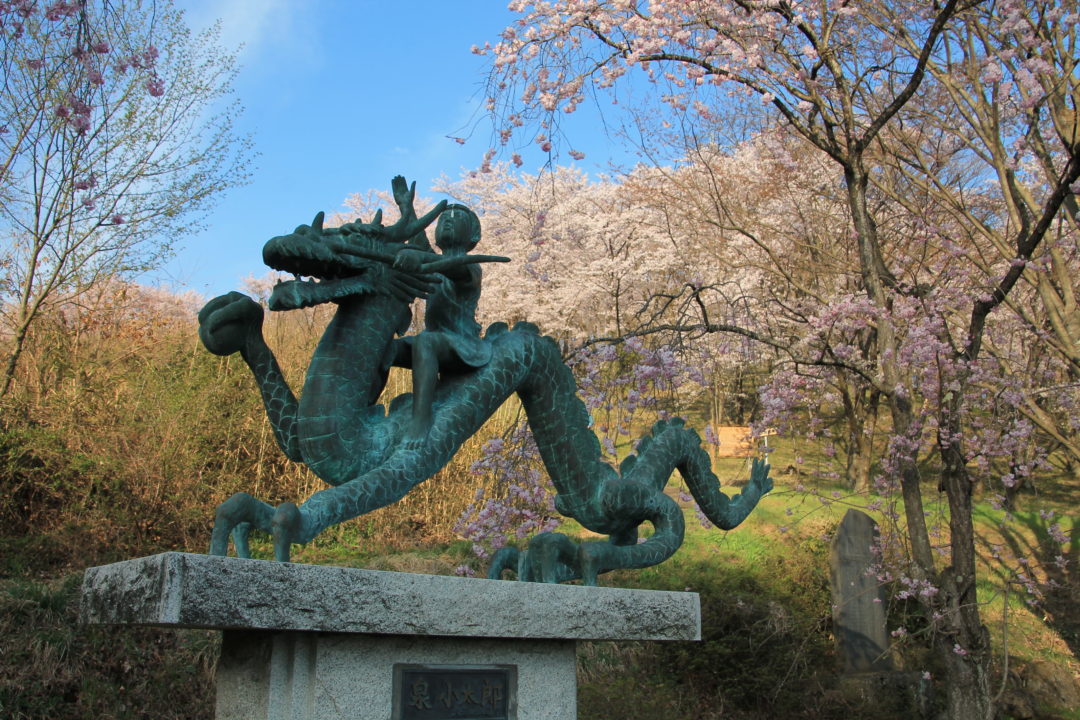
Kotaro Izumi Statue
White & Pink & Wildly Popular
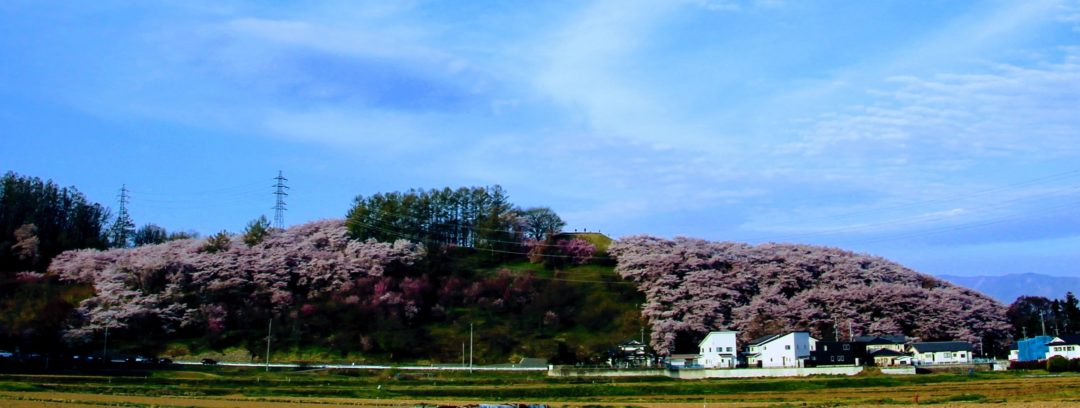
A hill among mountains, Koboyama does manage to attract plenty of attention one week out of the year. The entire mountain, from the north side around to the south, is one massive grove of cherry blossom trees, making for an amazing pink and white spectacle when cherry blossom season comes to town.


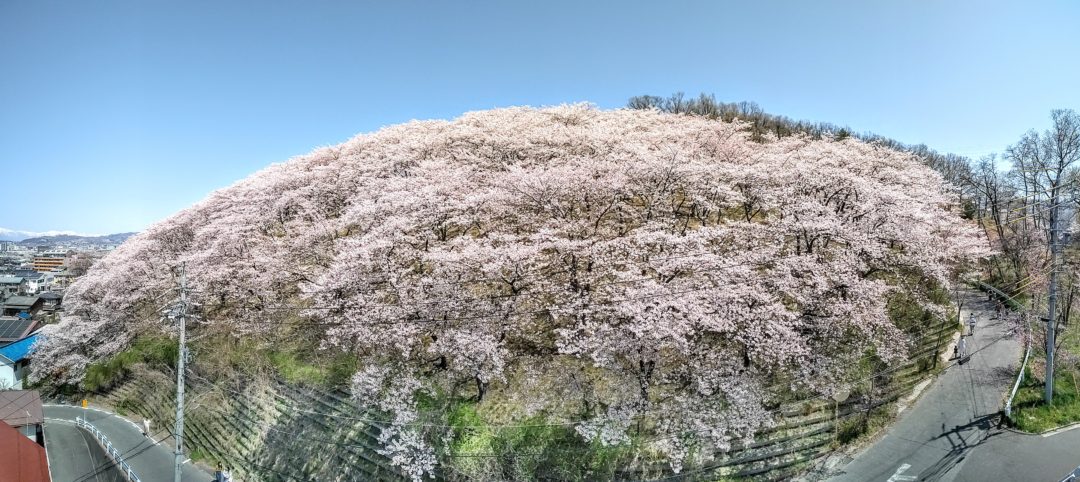
If you are lucky enough to be in Matsumoto during cherry blossom season, be sure to make the short trip south of downtown to see the blooming show on Koboyama. If you can, get there early to miss the crowds and take in the morning sun as it lights up the snow-covered peaks to the west.
As For the Rest of the Year…
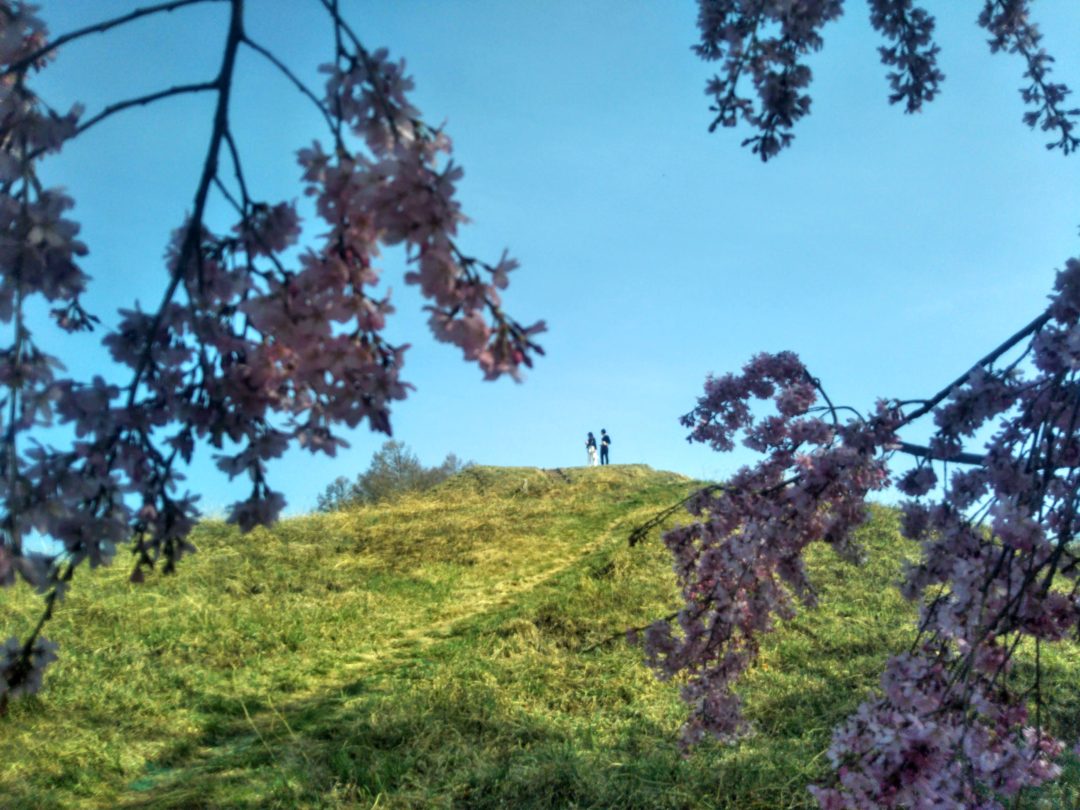
While the cherry blossoms are only around for a short time in April, the view from the top of Koboyama is yours to enjoy year-round. This burial mound turned viewpoint has such a reputation that it was chosen as the setting of the manga-movie Orange. (Never heard of it? Here’s the story.)
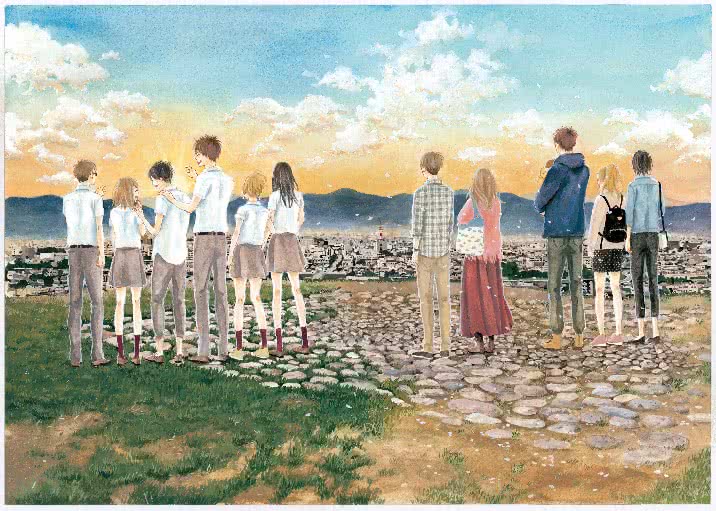
Orange Movie
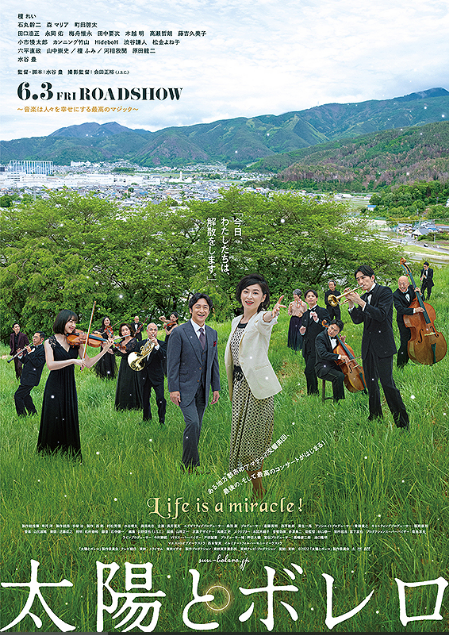
More recently some key scenes from the television movie “Taiyo to Bolero” were filmed right here on top of Koboyama. A story about life and music, translated as “Life is a Miracle”. Even the advertisement poster for the show has the cast standing on the uppermost slopes of the kofun.
People don’t generally think of Mount Koboyama as one of Matsumoto’s mountains. Compared to all those beautiful peaks west (and east) of town, this big old hill doesn’t seem like much. But despite the low elevation, this ancient mound is a worthy destination. It’s close, it’s accessible, and it has a few good stories to tell.
Author Profile

Latest entries
 Nature2025-08-01Mount Koboyama: A Big Destination with the Low Elevation
 Events2024-07-19Bon Bon Girls & Aoyama-Sama Boys: A Centuries-Old Matsumoto Tradition
 Sightseeing2023-12-18Handmade Soba, Simple Hiking & Hot Springs, All in Asama Onsen
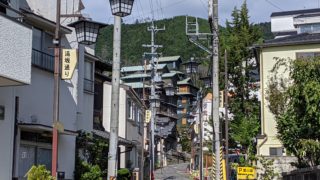
 Seasonal Topics2023-12-04Winter Wonderland: 5 Ways to Put Your Feet in the Matsumoto Snow