
Matsumoto’s New Year Fire Festival: San-ku-ro
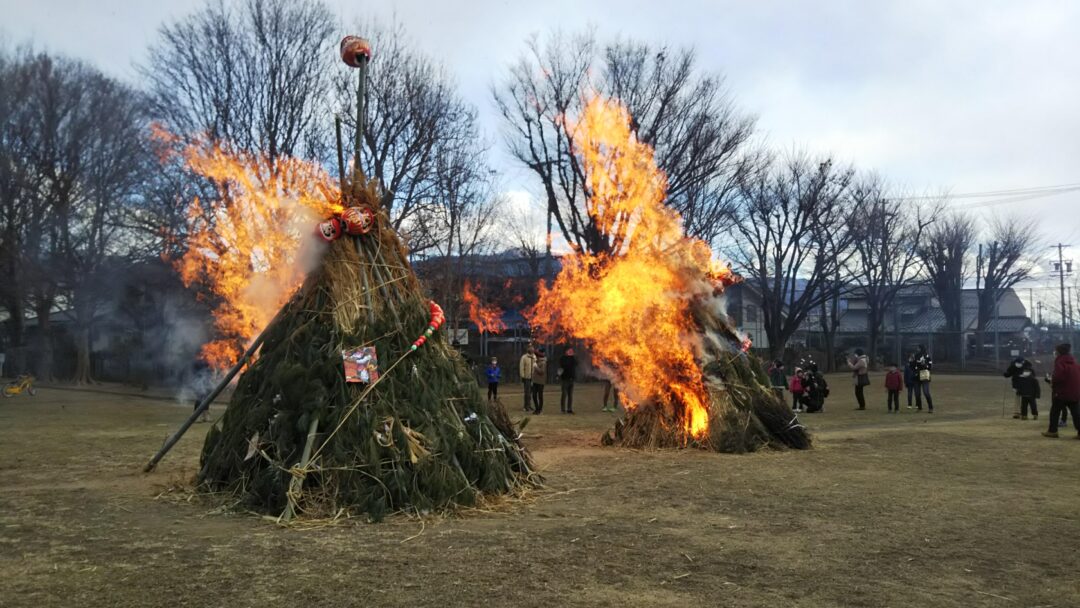
Each winter in Matsumoto, after the New Year holidays quiet down, fires appear in fields, riverbanks, and parks. This is San-ku-ro (三九郎), a local New Year fire festival that marks the end of the season. It is part of the same family of rituals that other regions call dondoyaki: a bonfire where decorations and charms from the New Year are returned to the flames. Discover everything about Matsumoto’s New Year Fire Festival.
Matsumoto’s New Year Fire Festival: San-ku-ro
Meaning and rituals
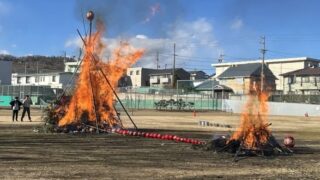
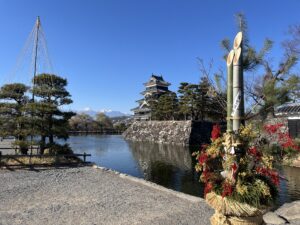
San-ku-ro is usually held in early to mid-January. Communities bring their New Year decorations such as kadomatsu (pine arrangements), and shimenawa (sacred ropes). But also other seasonal items including old charms or daruma dolls. These are piled onto a tall framework of bamboo and straw, then burned in a single large fire.
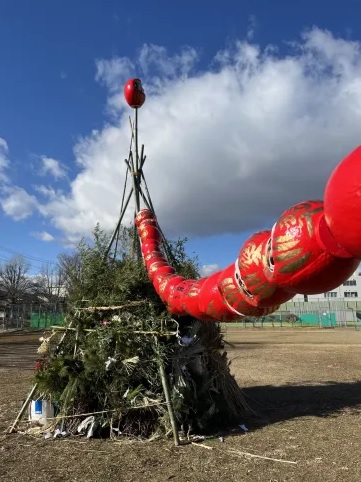
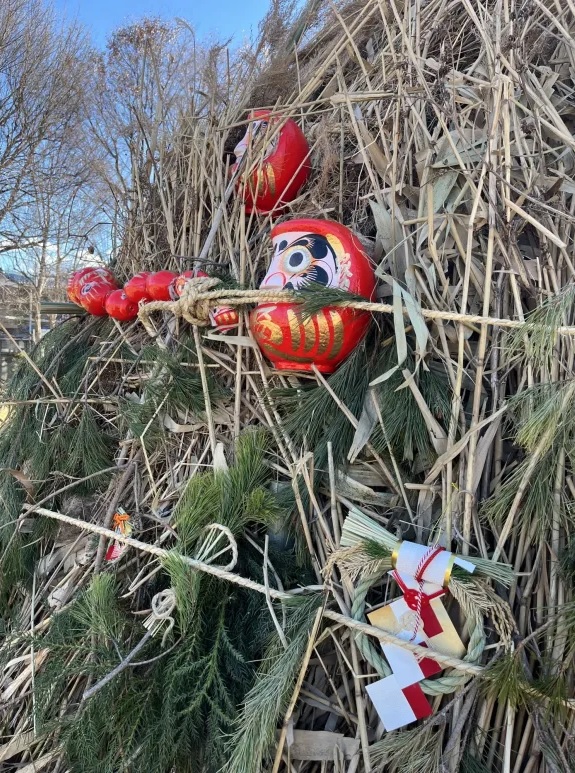
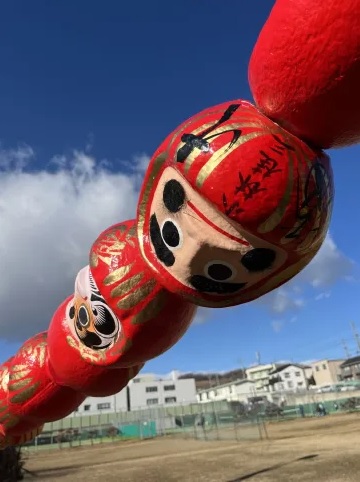
From a Shinto point of view, these objects are not simple rubbish. They are thought to have protected households and carried good fortune during the New Year period. The fire returns them to the kami, purifies what remains, and gives thanks for the protection they have offered. It also marks a clear break between the festive season and the return to ordinary life.
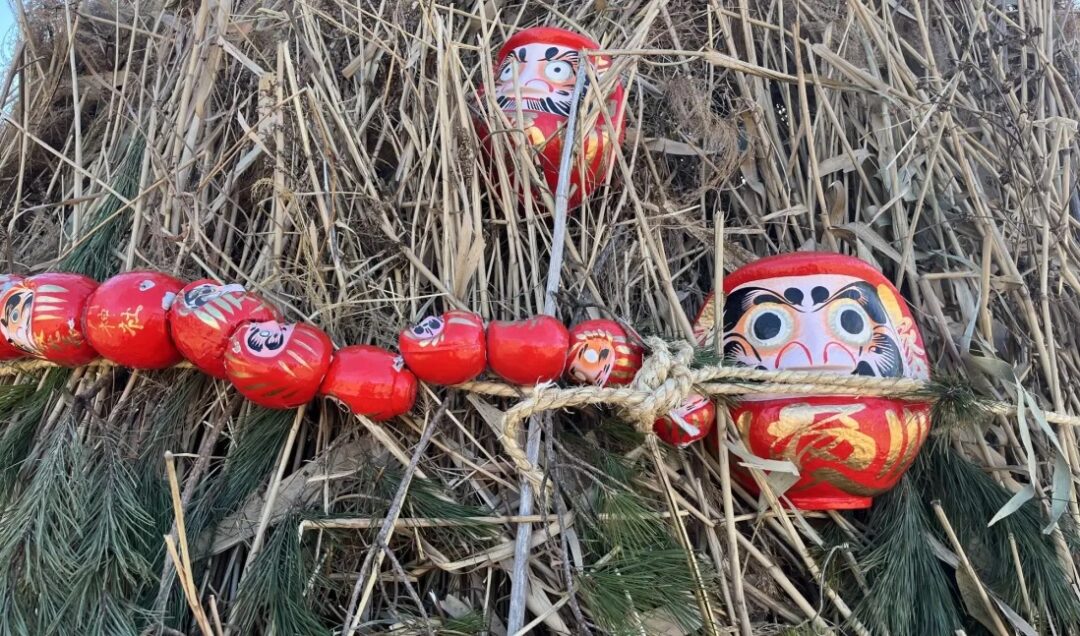
Daruma dolls are thought to have protected households and carried good fortune
This kind of bonfire is often linked to the older Sagichō rituals once held at the imperial court in Kyoto during the Heian period, where bamboo structures were burned to purify and drive away misfortune. Over time, versions of that idea spread and took root in local communities, producing a patchwork of related New Year fire customs across Japan.
Names across Nagano
In Matsumoto and the surrounding Chūshin region of Nagano, this bonfire is commonly called San-ku-ro. Elsewhere in Japan, the same basic practice is better known as dondoyaki. Even within Nagano Prefecture, names vary. Some eastern areas also use the term dondoyaki. While around Iiyama related New Year bonfires are tied to Dōsojin Matsuri, a festival for the deity who protects roads, borders, and travelers.
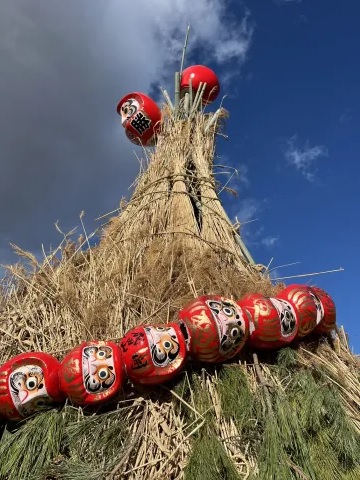
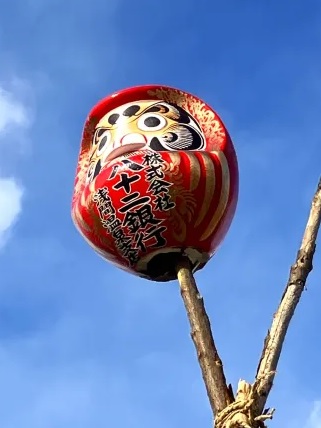
The origin of the word San-ku-ro itself is not clear. Local explanations include stories about a priest once associated with Dōsojin worship. As well as folk interpretations that link the name to the idea of driving away “three great hardships” such as poor harvests, heavy taxes, and illness. Whatever its exact roots. The name now simply means the neighborhood New Year bonfire to most people who grow up here.
Mayudama and winter food
In many Matsumoto neighborhoods, local associations and elementary schools build the bonfire structure together, often in a park or open field. Once the blaze has died down and the embers are glowing, another custom begins.
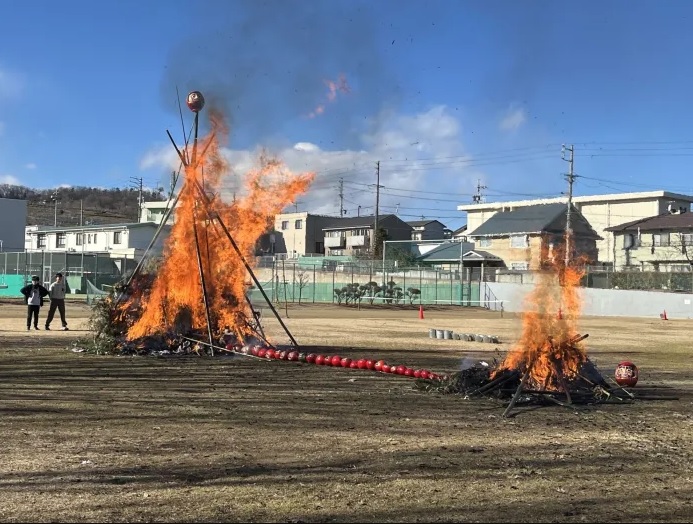
Local people build the bonfire structure together, often in a park or open field
Children skewer small colored mochi balls called mayudama onto willow branches and grill them over the embers. The name literally means “cocoon balls”. The shape recalls silkworm cocoons, and the custom grew in silk-producing regions during the Edo period as a way to pray for healthy silkworms and good production. Matsumoto and its surroundings were once part of a major sericulture area. So the image of cocoons would have been very familiar.
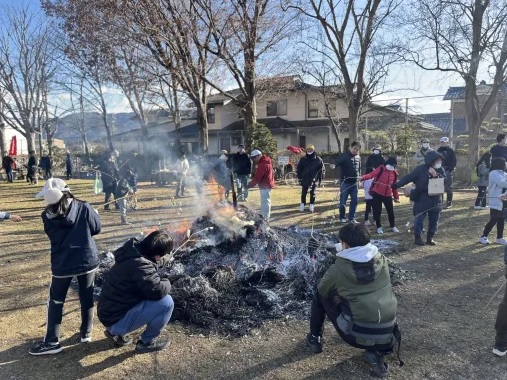
Eating food warmed over the remains of the New Year fire is thought to bring good health
In some places people also bake yaki-imo, sweet potatoes wrapped and tucked into the hot ash. Eating food warmed over the remains of the New Year fire is thought to bring good health and good luck for the year ahead.
A neighbourhood winter gathering
San-ku-ro plays out as a neighborhood ritual rather than a formal show. Children roast mayudama over the embers. Adults talk at the edge of the fire, and teachers watch over their school groups. It looks like an ordinary winter gathering, but it rests on ideas that have been passed down for generations.
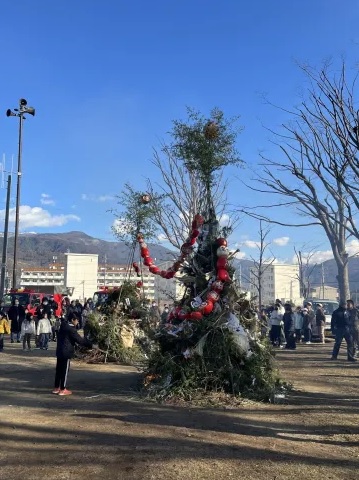
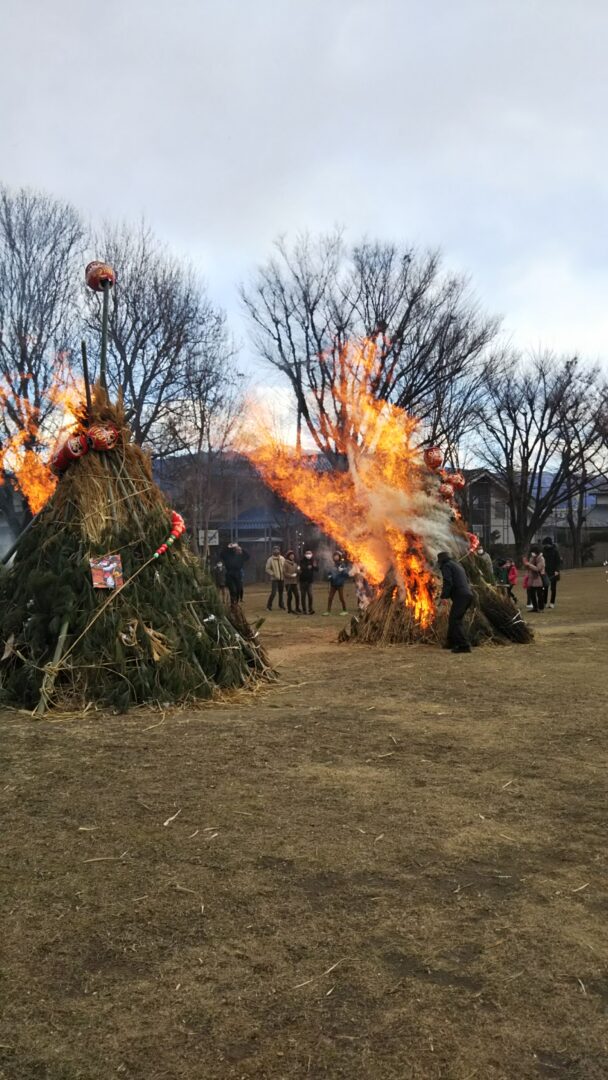
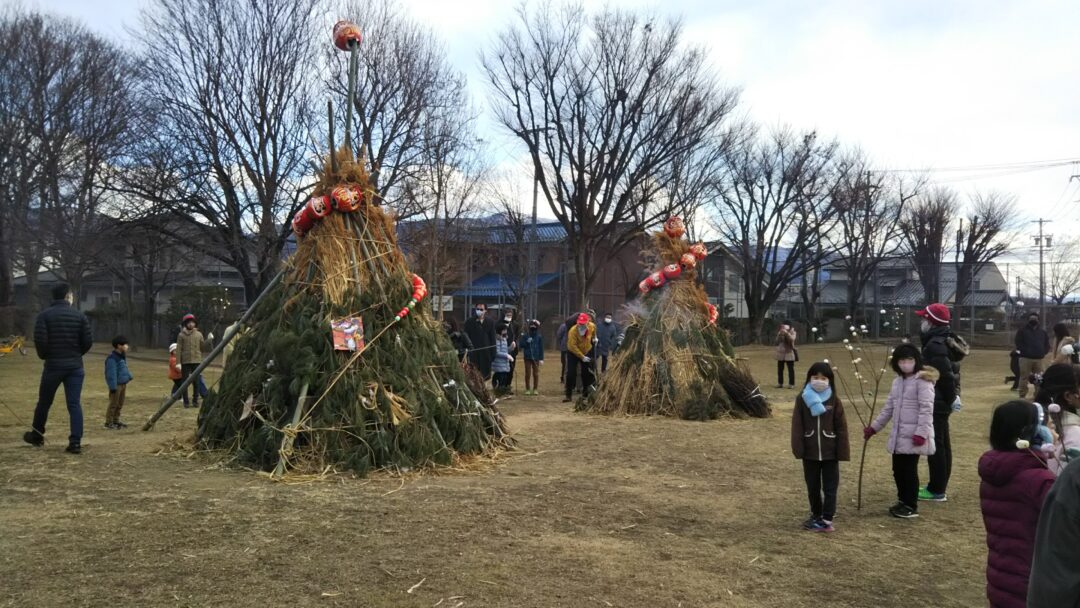
If you happen to be in Matsumoto in January and are invited to a San-ku-ro bonfire, it is a chance to see how Matsumoto’s New Year fire festival traditions continue beyond the first few days of the year. You will be standing in a cold field, watching decorations and wishes from the past year turn to sparks and smoke, surrounded by people who are doing what their grandparents and great-grandparents once did in much the same way.
Author Profile

-
Welcome-Matsumoto Blogger / Guide
Languages / Langues : Français, English & 日本語

One thought on “Matsumoto’s New Year Fire Festival: San-ku-ro”